

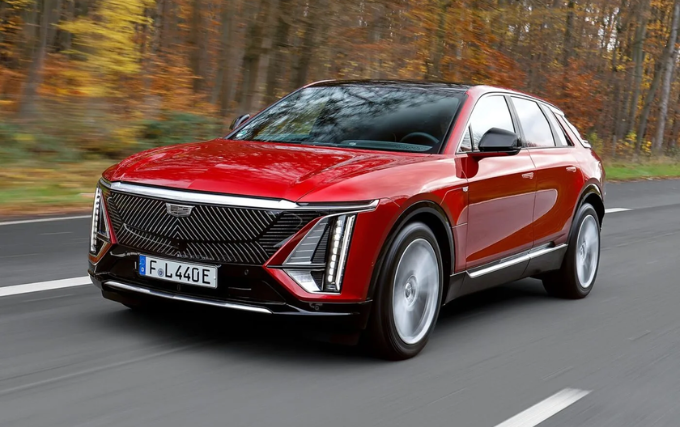
In conversations concerning the Cadillac LYRIQ, one question keeps coming up. The main question is whether the vehicle’s many driving modes actually affect how far you can go on a single battery. In summary, they do have an impact on battery usage, although the official range is unchanged. Let’s investigate what precisely occurs when you turn that dial.
Understanding the Fixed Number
First, make one important point clear. The LYRIQ has a single EPA-estimated range of up to 326 miles for rear-wheel-drive variants, according to Cadillac. When you move from Tour to Sport or any other mode, this number remains unchanged. The official exam is conducted in a standardized laboratory setting rather than by cycling through every scenario that could arise for a driver. Therefore, regardless of your decision, the battery retains the same quantity of energy. The speed at which the car uses its stored power determines the difference.
A Closer Look at Each Mode
Tour, Sport, Snow/Ice, and My Mode are the four main driving modes offered by the LYRIQ. Each one modifies different aspects of the car, and these modifications have a direct impact on energy usage.
Tour Mode: The Efficiency Benchmark
For daily driving, tour mode is the default setting. A comfortable and seamless ride is given top priority. The accelerator pedal reacts gradually in this setup, promoting steady acceleration as opposed to abrupt spikes. This methodical approach to speed adjustments aids in maintaining a steady battery energy demand. Tour mode usually provides the closest experience to the official EPA range for drivers who want to maximize their distance. It offers the most effective starting point for contrasting the other modes.
Sport Mode: Performance Comes at a Cost
The vehicle’s demeanor is totally changed when it is in sport mode. It delivers torque more quickly by sharpening the throttle response. The car seems more eager and nimble as the steering tightens. However, this improved performance requires more energy. Higher current is drawn from the battery pack by faster acceleration. In comparison to Tour mode, choosing Sport mode can reduce real-world range by an estimated 10% to 20%, according to owner-reported statistics and analysis. This decrease could result in 30 to 60 fewer miles of travel on a full charge for a car with a 326 mile rating.
Snow/Ice Mode: Traction Control and Its Effects
Snow/Ice mode prioritizes safety over effectiveness or performance. In order to stop wheel spin on slick conditions, it softens power delivery. The traction control system becomes more alert and sensitive. This mode may result in a slight decrease in range, maybe between 5% and 10%, particularly on dry roads where the car’s systems are operating needlessly. It’s interesting to note that the mode can save energy in real snowy circumstances by avoiding energy-wasting wheel slide. However, the influence of the mode is sometimes overshadowed by the cold weather itself, which typically results in the biggest range penalty.
My Mode: A Customizable Middle Ground
By letting drivers mix and combine settings, My Mode provides a customized experience. Sport mode has a harder steering reaction, whereas Tour mode offers a more relaxed acceleration feel. The impact on range varies because the driver chooses these combinations. A driver will probably use more battery power if they choose sporty acceleration. A driver will see outcomes more akin to Tour mode if they choose a more effective throttle tune.
The Official Word on Range
Why do these modes alter battery consumption without altering the stated range? The drive mode is not changed by the EPA testing procedure. The official numbers are used as a standard by which various vehicles are compared. They serve as a foundation for your expectations. As a result, the 326-mile range of the LYRIQ is not a guarantee for every driving scenario, but rather the vehicle’s capability under ideal, regulated conditions. Almost every electric car now on the market falls under this category.
What Owners Actually Experience
Thousands of LYRIQ owners’ real-world data offers insightful information. Despite being highlighted a lot, sport mode is surprisingly low on the list of parameters that affect range. Sport mode is expressly mentioned in just 1.1% of range-related concerns. Cold weather, tire selection, and highway speed are far more important variables.
Just adjusting tire pressure resulted in a notable increase in economy, according to one owner. Aggressive highway driving at 75 mph uses far more energy than any mode choices, according to another. These findings imply that your driving style and car upkeep are frequently more important than the mode you choose. Owners often commend the one-pedal driving feature and regenerative braking technology for their efficiency benefits, both of which are crucial in recovering energy during deceleration.
The Science Behind Battery Consumption
A quick review of battery physics is necessary to comprehend why various modes impact range. The electric motors are powered by the LYRIQ’s 102 kWh battery pack in response to driver inputs. In Sport mode, the system opens the power flow more forcefully when you depress the accelerator. The current extracted from the battery cells is increased as a result. Increased heat production and decreased energy conversion efficiency are the results of higher current discharge. Tour mode keeps the battery within its ideal operating window for energy delivery by limiting this current draw.
Another important factor in this equation is temperature. Internal battery resistance rises in cold weather, making effective energy extraction more difficult. This effect is amplified by the demanding nature of sport mode, which may further reduce range in cold weather. On the other hand, warm weather makes it possible for the battery to function more effectively, reducing the difference between modes. The battery management system responds to your chosen mode while continuously monitoring these factors and modifying power delivery to safeguard cell health.
Regenerative Braking and Mode Interactions
The range concern is further complicated by regenerative braking. During deceleration, this system stores energy and replenishes it in the battery. The intensity and feel of regenerative braking vary depending on the driving mode. Regenerative braking in Tour mode maximizes energy recovery during routine stops with a balanced, predictable feel. In order to enable more conventional coasting behavior, sport mode occasionally lowers regen intensity at the expense of possible energy recovery. In order to avoid wheel locking on slick conditions, which can also reduce the amount of energy gathered, Snow/Ice mode modifies regen.
One distinct but connected feature is one-pedal driving. With this option, drivers can only use the accelerator pedal to accelerate and decelerate. The car automatically engages regenerative braking when you release the pedal. By promoting smoother deceleration and optimizing energy capture, one-pedal driving can greatly increase efficiency. This function adds additional level of customisation that impacts range and can be used independently of the driving modes.
Highway versus City Driving
Depending on your surroundings, driving modes have very different effects. Regenerative braking is crucial when driving in cities with plenty of stops. In stop-and-go traffic, the smooth acceleration and steady regen of tour mode can result in significant efficiency gains. These benefits may be offset by the rapid acceleration between lights in sport mode, since each burst uses additional energy that regen is unable to fully replenish. The distinctions between modes are accentuated in urban driving settings.
Driving on the highway paints a different view. Acceleration requirements become negligible at constant speeds. The vehicle’s primary challenges are rolling resistance and aerodynamic drag. The driving mode has less of an impact on energy use in this situation. Regardless of the mode chosen, the engine runs at a nearly constant efficiency point due to the constant speed. As a result, on extended highway segments, the range gap between Tour and Sport modes gets smaller. The primary exception is during highway passing maneuvers, when drivers may be tempted into efficiency-defeating speed bursts by Sport mode’s rapid responsiveness.
Tire Selection and Pressure
Range is impacted by how tire selection interacts with driving modes. Tires specifically made for reduced rolling resistance are included with the LYRIQ. The energy needed to keep the car moving is decreased with these tires. Achieving the quoted range still depends on maintaining the right tire pressure. The motor must work harder and use more battery energy when the tires are underinflated since this increases rolling resistance.
While driving modes can alter how aggressively you utilize the tires, they do not alter tire pressure. By raising rolling resistance through lateral forces and slip angles, sport mode’s quicker steering and acceleration impose additional strain on the tires. Higher energy use is a result of this extra stress. These forces are lessened by the gentler approach of tour mode, which improves tire rolling efficiency. The best way to maximize range is to use Tour mode in conjunction with proper tire maintenance.
Climate Control and Auxiliary Systems
The battery is a major source of power for climate control systems. In certain EVs, heating the cabin during the winter might cut range by 20% to 30%. The driving modes can affect how you drive, which in turn affects how much energy is left for climate functions, but they do not directly control climate settings. Because sport mode uses more energy, there is less battery capacity available for cabin heating or cooling.
Here, My Mode provides an intriguing workaround. My Mode allows you to customize steering and suspension feel while preserving Tour-style acceleration. This combination gives you a more enjoyable driving experience while preserving battery energy for climate control. In severe weather, where climate demands directly conflict with propulsion requirements, this flexibility is very beneficial.
Long-Term Battery Health
Over time, batteries gradually deteriorate, but driving behaviors affect how quickly this happens. Higher discharge rates and rapid acceleration in sport mode cause the battery cells to produce more heat. One of the main threats to the longevity of lithium-ion batteries is heat. Over the course of the vehicle’s lifetime, frequent use of Sport mode may hasten capacity degradation and progressively reduce usable range. The milder demands of tour mode lower battery temperatures, possibly extending capacity for additional years.
To manage these temperature fluctuations, Cadillac engineers created the thermal management system for the LYRIQ. To keep the battery at ideal operating temperatures, the system actively heats or cools it. However, energy is used for this active management. The heat generated in sport mode makes the cooling system work harder, requiring more power, which lowers overall efficiency. As a result, a feedback loop is created whereby increased performance requirements lead to increased auxiliary energy use, which further reduces range.
The Human Factor
The mode selector is generally less important than driving style. In Sport mode, a motorist who maintains stable speeds and accelerates gradually will have a greater range than an aggressive driver in Tour mode. Your innate proclivities are simply amplified by the mode. By making soft inputs feel natural, tour mode promotes efficiency. Sport mode makes quick inputs feel rewarding, which promotes performance. The result is ultimately determined by your foot.
Sport mode is rarely used, according to many owners, who save it for on-ramps or circumstances that call for rapid merging. After that, they go back to Tour mode to continue cruising. This hybrid strategy strikes a balance between the efficiency advantages of Tour mode and the pleasure of Sport mode’s responsiveness. This adaptive driving approach is encouraged by the LYRIQ’s user interface, which makes changing modes quick and simple.
Comparing to Other Electric Vehicles
Similar mode-related range variances are seen in other electric vehicles. The efficiency differences between Tesla’s Sport and Chill settings are similar. Similar trade-offs are available in the Engage, Whisper, and Unbridled modes of Ford’s Mustang Mach-E. This trend implies that driving mode impacts are not specific to the LYRIQ. The basic physics of electric powertrains is reflected in them: more energy is required for more violent acceleration.
These impacts are more apparent, though, because of the LYRIQ’s larger battery and heavier weight. Because of its large mass, the vehicle needs a lot of energy to accelerate rapidly. In a heavier vehicle, the distinction between aggressive and smooth acceleration becomes more noticeable. Compared to smaller EVs, this feature makes mode selection more significant in the LYRIQ.
Practical Range Management Tips
You may efficiently manage range across various modes by using a few tactics. First, when range certainty is most important, utilize Tour mode for extended road trips and regular commuting. Second, using My Mode to establish a well-balanced configuration that maintains productivity while incorporating a sense of customization. Third, avoid using Sport mode for extended periods of time and instead reserve it for brief, pleasurable spurts. Fourth, keep an eye on your efficiency display to see how your driving habits impact usage. Fifth, keep the tires at the right pressure and lighten the car.
The battery’s cold-weather range can also be increased by preconditioning it while it is plugged in before leaving. This method preserves stored charge for driving by warming the battery using grid power instead of battery energy. The ideal beginning point for winter travel is to combine preconditioning with Tour mode. These useful actions frequently result in higher range gains than just switching to a different driving mode.
The Bottom Line on Range Differences
The Cadillac LYRIQ driving modes undoubtedly have an impact on real-world range and battery consumption. Because sport mode uses more energy, range may be reduced by 10% to 20%. On dry roads, the snow/ice mode may marginally reduce range. The most efficient operation, which is closest to the EPA estimate, is provided by tour mode. Customization in My Mode can strike a balance between productivity and enjoyment. Because it is a standardized test result rather than an estimate of actual results, the official 326-mile range is still set.
When it comes to how mode selection affects range, other considerations frequently take precedence. Larger factors include speed, temperature, terrain, tire condition, use of climate control, and driving style. Even in Sport mode, a composed driver may still outperform an aggressive driver in Tour mode in terms of range. Although the mode offers a framework, the outcome is ultimately determined by your decisions made while operating the vehicle.
Conclusion
Although the official EPA estimate is same, the Cadillac LYRIQ’s driving modes significantly alter battery consumption and actual range. Sport mode’s faster acceleration and better throttle response might cut range by 10% to 20%. The most effective operation is provided by tour mode, which comes near to the stated 326 miles. Safety is given priority in Snow/Ice mode, with only slight compromises to efficiency. My Mode allows you to adjust the balance. However, the cumulative impact of driving habits, speed, temperature, and tire pressure frequently surpasses that of mode selection. Knowing these trade-offs enables you to make informed decisions for every trip. Your foot ultimately dictates the outcome, Sport mode offers excitement when range is less important, and Tour mode works well for extended excursions.
