

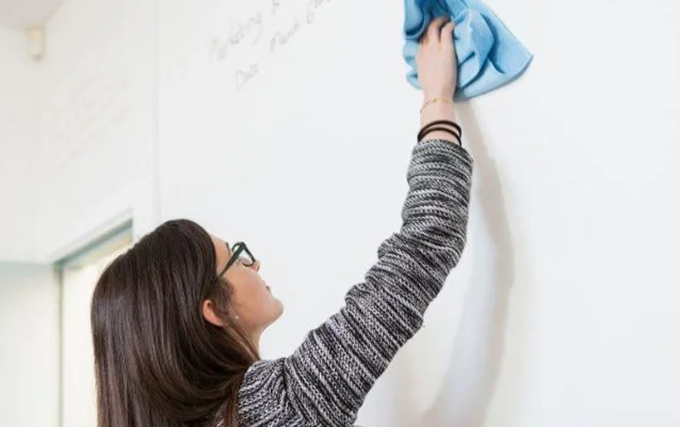
One of the most helpful items in any house, business, or school is a whiteboard. You can use it to track projects, generate ideas, and set reminders. However, that brilliant white surface may eventually become a smudgy mess. Shadows of previous notes may remain after the eraser stops functioning properly. This article provides step-by-step instructions for returning your board to its original, immaculate state.
Gather Your Cleaning Supplies
Assemble the necessary cleansers and tools before you start. Using the right materials guarantees the finest outcomes and guards against damage.
The Right Cloths
Grab a microfiber cloth. Dust and ink residue are lifted by this soft material without causing any damage to the board’s sensitive surface. The abrasive texture of several paper towel brands can cause little scratches. These scrapes eventually catch ink and make cleaning the board more difficult. Have a few microfiber cloths on hand for various cleaning phases.
The Right Cleaners
For cleaning solutions, you have a number of excellent choices. A specific whiteboard spray is effective and frequently comes with a conditioner to help shield the surface. One cup of water and one teaspoon of white vinegar provide a more natural substitute. Another effective option for removing tough marks is rubbing alcohol, often known as isopropyl alcohol. A drop of dish soap combined with water can also be used to make a mild solution. Standard kitchen and bathroom cleaners contain chemicals that can damage the whiteboard’s finish, so stay away from using them.
The Daily Cleaning Routine
Stains and ghosting can be avoided with routine maintenance. Include these easy steps in your everyday routine.
Erase Properly
Don’t delete the ink until it has totally dried. Erasing wet ink forces the color into the pores of the board and results in smearing. To remove the dry ink from the surface, use the whiteboard eraser in a hard, circular motion. To get rid of the dust that builds up on your eraser, clean it on a regular basis. Simply put, a filthy eraser spreads dirt everywhere.
Wipe Down After Use
Avoid leaving notes on the board for long periods of time. The likelihood of staining increases with the amount of time ink remains on the surface. Erase all of the material after every class or meeting. Any remaining dust or debris can also be eliminated with a fast daily wipe-down with a dry microfiber cloth.
The Deep Cleaning Method
Your board will ultimately require a more thorough cleaning, even with diligent regular upkeep. This procedure eliminates the haze and obstinate “ghosting” that the eraser cannot remove on its own.
Step 1: Prep the Surface
To get rid of as much loose dust and ink as you can, start by erasing the entire board. By doing this first step, you avoid just distributing old ink throughout the deep clean.
Step 2: Tackle Stubborn Ghosting
For faint marks that won’t go away, try this ingenious method. The old, ghosted marks should be thoroughly colored over with a new dry-erase marker. Allow this fresh ink to completely dry. Next, use your eraser to remove it. The old ink is lifted from the surface by the fresh ink’s binding to it. If needed, repeat this procedure.
Step 3: Apply Your Cleaning Solution
Prepare to apply the cleaning solution of your choice. There are several ways you can move forward.
- Vinegar Solution: Combine one part water and one part white vinegar. Use a moist cloth to apply this solution or spray it straight onto the board.
- Rubbing Alcohol: Put a tiny bit of isopropyl alcohol on your microfiber cloth. This works well to dissolve ink, so use it for stains that are more difficult to remove.
- Soapy Water: Combine water and a drop of dish soap. Using a cloth, apply this mild solution on the board to remove general dirt.
- Specialty Cleaner: For the particular cleaner you bought, adhere to the directions on the product label.
Step 4: Wipe and Rinse
Once the solution has been applied, use a different moist microfiber cloth to thoroughly clean the board. This cloth needs to be spotless and devoid of any cleaning agents. To get rid of any leftover cleaning and dissolved ink, you are basically rinsing the board. To ensure the surface is totally dry, use another dry microfiber towel.
Step 5: Let the Board Air Dry
After cleaning the board, let it air dry for at least half an hour. Deeper layers of the surface might still be wet even though it feels dry to the touch. If you write on a wet board, the ink may discolor, giving you a new challenge to overcome.
Dealing with Permanent Marker
Accidents do occur. A permanent marker could be confused with a dry-erase marker. Don’t freak out. There is an easy way to solve this issue.
The Dry-Erase Marker Trick
For the majority of unintentional permanent marker instances, this approach is effective. Draw over the permanent marker lines with a dry-erase marker. Cover the entire stained area completely. Allow it to fully dry. After that, just use a microfiber cloth or your eraser to remove it. You can erase both because the permanent ink is dissolved by the solvent in the dry-erase ink.
The Rubbing Alcohol Solution
Use rubbing alcohol if the first approach doesn’t work completely. Put a tiny bit of isopropyl alcohol on a fresh cloth. Rub the stain gently in a circular motion. You can remove the permanent marker because the alcohol dissolves it.
What to Avoid
It’s just as vital to know how to clean your whiteboard as it is to protect it. Permanent damage can be caused by some materials and cleaners.
Harsh Scrubbing Pads
Steel wool, scouring sponges, and abrasive pads should never be used on the board. The surface will be scratched by these materials, leaving ink-settling grooves. The board becomes considerably more difficult to clean if it is scratched, and it may sustain irreversible damage. Additionally, don’t use an old, hard, or crusty felt eraser because it can harm the surface.
Aggressive Cleaners
Avoid using glass cleaners that include ammonia, such as Windex. Steer clear of any cleanser that contains harsh solvents, such as acetone or nail polish remover. Your whiteboard is also at risk from industrial or all-purpose domestic cleansers. These substances have the potential to remove the surface’s protective layer, making the board more prone to stains and shortening its lifespan.
Important Whiteboard Facts
Different Surfaces Require Different Care
The safest cleaning techniques depend on the substance of your whiteboard.
- Painted Steel: This ubiquitous, reasonably priced surface is good for everyday use, but if you don’t take care of it, it can stain more easily.
- Porcelain: These boards are very resilient and successfully fend off ghosting. They are perfect for frequent use.
- Glass: These surfaces are stain-resistant and non-porous. To prevent streaks, they frequently need a certain glass-safe cleaning.
The Importance of Regularity
The secret to a spotless whiteboard is still consistency. Make it a point to clean your whiteboard on a regular basis. This little practice keeps ink from accumulating and spares you from later having to deal with stubborn, set-in stains. Your board will seem brand new for years if you do a weekly deep clean in addition to daily erasing.
FAQs
Q: What causes ghosting on a whiteboard?
A: The faint, shadowy markings that stay on the board after you wipe it are called “ghosting.” It happens when the ink becomes trapped in the tiny pores of the board. When you leave ink on the board for an extended period of time, this frequently occurs. This issue may also arise from using an unclean eraser or the incorrect kind of marker.
Q: Can you clean a whiteboard with water only?
A: Indeed, a lightly used board may be cleaned with just water and a moist microfiber cloth. Daily dust and light smudges can be effectively removed with water. Water won’t be enough for deeper stains or ghosting. To get rid of the tough ink, you’ll need a cleaning solution like vinegar, rubbing alcohol, or a specialist spray.
Q: Is it safe to use vinegar on my whiteboard?
A: For the majority of whiteboards, a diluted vinegar solution is both safe and effective. Combine one cup of water with one teaspoon of white vinegar. For a more potent solution, you can also use a 1:1 vinegar to water ratio. Without harming the board’s surface, vinegar functions as a natural, chemical-free cleaning to remove ink residue.
Q: How do I get permanent marker off a whiteboard?
A: Using a dry-erase marker to trace over the permanent marker is the most efficient method. After letting it dry, remove both marks at once. Apply a tiny bit of rubbing alcohol on a cloth and carefully wipe away any leftover stain. Acetone might harm the board’s protective coating, so stay away from using it.
Conclusion
Expensive products or harsh chemicals are not necessary to restore your whiteboard to like-new condition. Basic home materials such as microfiber cloths, vinegar, and rubbing alcohol are excellent. Maintaining a regular cleaning schedule helps you avoid dealing with tough stains in the future. Don’t forget to quickly delete notes after using them. To stop ghosting, do a deeper clean once a week. Avoid using abrasive pads and harsh cleansers like acetone or ammonia to preserve the surface of your board. The dry-erase marker method provides a fast fix for permanent marker mishaps. Your whiteboard will be dependable for many years if you take good care of it. Make upkeep a regular habit since a clean board encourages productive teamwork and clear thinking.
