

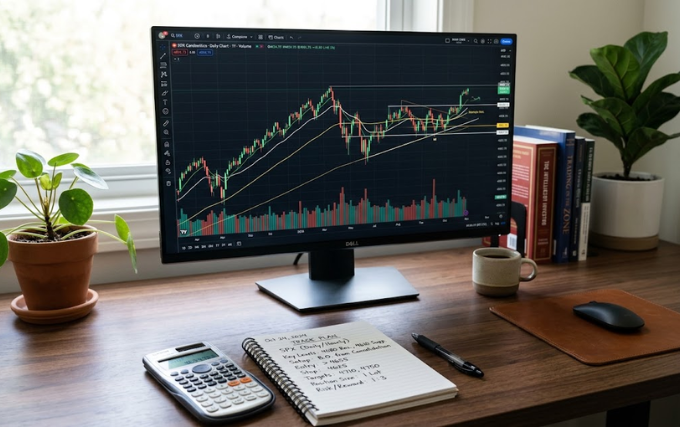
Intraday trading attracts people who want to understand financial markets and take advantage of short-term price movements. Unlike long-term investing, this approach involves buying and selling financial assets within the same trading day. Traders study price charts, market trends, trading volume, and economic news to identify potential opportunities. However, success requires patience, careful planning, and strong risk management.
The phrase profitable intraday trading advice 66unblockedgames.com combines a popular financial topic with the name of a gaming-related website. This combination raises an important question: how can readers find useful trading information when a website name does not clearly indicate a connection to financial markets? The best approach involves understanding intraday trading fundamentals, checking the reliability of online information, and avoiding unrealistic promises about profits.
This guide explains the essential principles of intraday trading, practical techniques for beginners, and the steps readers can take to evaluate online trading advice responsibly.
What Is Intraday Trading?
Intraday trading, also called day trading, involves opening and closing trading positions during the same trading session. Traders may buy an asset when they expect its price to rise or sell an asset when they expect its price to fall, depending on the market and available trading instruments.
For example, a trader might purchase a stock at $50 and sell it later at $52. Before fees and taxes, the trade produces a $2 profit per share. However, if the price falls to $48 and the trader sells, the position creates a $2 loss per share.
Although these examples look simple, real markets involve unpredictable movements, transaction costs, and emotional pressure. Therefore, traders need a defined strategy instead of relying on guesses.
Intraday trading can involve stocks, currencies, futures, and other financial instruments. Each market has different trading hours, risks, regulations, and costs. Beginners should learn how their chosen market works before committing money.
Understanding 66unblockedgames.com and Trading Advice
When readers encounter a phrase that connects intraday trading advice with 66unblockedgames.com, they should examine the website’s actual purpose before treating it as a financial education resource.
The domain name suggests a possible connection to browser-based games, but a name alone cannot establish what the website currently offers. Without verified information about its content, ownership, and services, readers should not assume that it publishes professional trading guidance or provides financial tools.
Instead, check the website directly and look for relevant sections, an identifiable publisher, transparent contact information, and references to reliable financial sources. If the site discusses trading, compare its claims with information from established financial regulators, exchanges, and reputable educational resources.
Furthermore, avoid entering brokerage passwords, bank details, payment information, or sensitive personal information on a website that you cannot verify. A gaming website and a financial platform serve different purposes, so readers should confirm that any trading-related service has a legitimate connection to the financial industry.
The most useful lesson is simple: evaluate the information itself rather than trusting a domain name or an attractive headline.
Essential Principles for Profitable Intraday Trading
No strategy guarantees a profit on every trade. Nevertheless, disciplined habits can help traders make more informed decisions and control avoidable risks.
1. Learn the Basics Before Trading
First, understand how financial markets operate. Learn about market orders, limit orders, bid and ask prices, liquidity, spreads, and trading volume.
Market orders generally prioritize execution, while limit orders specify the price at which you are willing to buy or sell. However, limit orders do not guarantee execution. These differences matter because even a small price change can affect the outcome of a short-term trade.
Beginners should also learn how brokerage fees, taxes, and other transaction costs influence returns. A strategy that appears profitable before expenses may produce disappointing results after all costs.
2. Create a Clear Trading Plan
A trading plan defines the conditions under which you will enter and exit a position. It also establishes how much money you can risk and which market conditions suit your strategy.
Before opening a trade, identify a potential entry price, a target price, and a level that signals the trade is no longer working as expected. Decide how much you can afford to lose before placing the order.
Additionally, avoid changing your plan simply because the market moves against you. A consistent process helps you evaluate your decisions more accurately over time.
3. Understand Market Trends
Price charts can help traders identify whether an asset generally moves upward, downward, or sideways. Traders often examine recent highs and lows to understand the current market structure.
An upward trend usually features higher highs and higher lows. Conversely, a downward trend often creates lower highs and lower lows. A sideways market moves within a relatively defined range.
However, trends can change without warning. Therefore, traders should combine chart observations with market context and risk controls rather than treating any pattern as a guarantee.
4. Use Technical Indicators Carefully
Technical indicators can help traders interpret price movements, momentum, and potential trend changes. Common examples include moving averages, the Relative Strength Index (RSI), and the Moving Average Convergence Divergence (MACD).
Moving averages smooth price data and can help identify general direction. RSI measures the strength of recent price movements, while MACD compares moving averages to examine momentum.
Although these tools can support analysis, they cannot predict every market movement. Moreover, multiple indicators may produce conflicting signals. Start with a small number of tools and learn their limitations before adding more complexity.
Practical Intraday Trading Strategies
Different strategies suit different market conditions. Beginners should test each approach carefully and understand its limitations before using real money.
Trend-Following Strategy
Trend-following traders look for opportunities in the direction of an established market movement. For example, a trader may watch an asset that continues to make higher highs and higher lows.
The trader then looks for a possible entry after a temporary price decline or a consolidation period. Before entering, the trader defines an exit plan and an acceptable loss.
This approach may struggle when the market moves sideways or reverses suddenly. As a result, trend confirmation and position sizing remain important.
Breakout Trading
Breakout traders watch important price levels, such as resistance above recent prices or support below them.
A breakout occurs when the price moves beyond one of these levels. Traders may interpret a move above resistance as a potential buying opportunity or a move below support as a potential selling opportunity.
However, prices sometimes break a level briefly and then return to their previous range. Traders call this a false breakout. Watching trading volume, waiting for confirmation, and setting an exit plan can help manage this risk, although none eliminates it.
Range Trading
Range trading focuses on assets that repeatedly move between identifiable support and resistance levels.
A trader might consider buying near the lower boundary and selling near the upper boundary, provided the market continues to respect that range.
Nevertheless, a sudden breakout can invalidate the approach. Traders should recognize when the market changes direction and avoid assuming that previous price levels will always hold.
Momentum Trading
Momentum traders focus on assets experiencing strong price movements. They may examine unusual trading volume, recent news, and rapid changes in price to identify potential opportunities.
Although momentum can continue, it can also disappear quickly. Late entries may expose traders to sharp reversals, especially when excitement pushes prices beyond levels that market participants consider reasonable.
For this reason, traders should avoid chasing every rapidly rising asset and should always consider the potential downside.
Risk Management: The Foundation of Long-Term Progress
Risk management deserves at least as much attention as choosing a trading strategy. Even experienced traders experience losing trades, and poor position sizing can turn a manageable loss into a serious financial problem.
Set a Risk Limit for Every Trade
Some traders use a small percentage of their trading capital as a maximum planned loss on each position. For example, a trader with $2,000 might choose to risk 0.5% of the account, or $10, on one trade.
This amount represents a planning limit, not a guarantee that the actual loss will remain at $10. Fast markets, gaps, slippage, and execution problems can cause losses to exceed the intended level.
The appropriate limit depends on personal circumstances, experience, and financial capacity. Never risk money needed for essential expenses.
Understand Stop-Loss Orders
A stop-loss order helps traders manage risk by triggering an order when the market reaches a specified level. However, a standard stop order may execute at a price different from the trigger price, particularly during rapid market movements.
Therefore, traders should understand the order types their brokers support and avoid assuming that a stop-loss order guarantees a precise exit price.
Avoid Excessive Leverage
Leverage allows traders to control a larger position with less initial capital. Although it can increase potential returns, it also magnifies losses.
A relatively small adverse price movement can consume a substantial portion of the account when leverage is high. In some products and jurisdictions, losses may create obligations beyond the initial amount deposited.
Beginners should understand these risks before considering leveraged products. In particular, avoid borrowing money to fund speculative trades.
Protect Your Trading Capital
A profitable trading routine begins with capital preservation. Avoid placing too much money into a single position, increasing trade sizes after losses, or using borrowed funds to recover previous losses.
Set a daily loss limit and stop trading when you reach it. Taking a break can prevent frustration and impulsive decisions from making a difficult session worse.
The Importance of Trading Psychology
Trading decisions involve emotions as well as numbers. Fear can cause traders to exit positions too early, while greed can encourage them to hold losing trades or take unnecessary risks.
Another common problem involves revenge trading. After losing money, a trader may immediately enter another position to recover the loss. This reaction often replaces a careful strategy with an emotional decision.
To develop better habits, create a written trading plan and record the reason for every trade. Review your results regularly, including losing positions, and look for repeated mistakes.
Furthermore, accept that missing an opportunity does not require immediate action. Financial markets create new opportunities over time, and waiting for a suitable setup often proves more useful than trading constantly.
How to Practice Without Risking Real Money
Beginners can develop their skills through paper trading or a demo account. These tools allow users to practice market analysis and test strategies without committing real capital.
Start by selecting one market and one straightforward strategy. Record the entry price, exit price, planned risk, actual result, and reason for each simulated trade.
After collecting enough examples, review the results. Examine whether the strategy performs better in trending markets, how transaction costs affect the outcome, and which situations produce repeated losses.
However, simulated trading has limitations. Demo accounts may not fully reproduce real-world slippage, emotional pressure, liquidity constraints, or order execution. Consequently, success in a simulation does not guarantee success with real money.
How to Evaluate Online Trading Advice
Online articles and videos can provide useful educational information, but readers should distinguish factual explanations from promotional claims.
First, look for clear explanations of the strategy, including its limitations. Reliable educational material acknowledges uncertainty and explains that losses remain possible.
Next, check the author’s qualifications and the quality of the sources. Verify important claims through recognized financial regulators, official exchange websites, and established financial education resources.
Be cautious when someone promises guaranteed profits, advertises unusually high returns with little risk, or pressures readers to deposit money immediately. These claims deserve careful scrutiny.
Also, treat screenshots of trading profits and testimonials as insufficient proof of consistent performance. Such examples rarely show the full picture, including losses, fees, account size, and the period covered.
If a website combines gaming content with financial information, verify each section independently. Do not assume that expertise in one subject establishes expertise in another.
Common Intraday Trading Mistakes to Avoid
Many beginners make avoidable mistakes because they focus on quick profits instead of developing a repeatable process.
- Trading without a plan: Entering positions without defined exit conditions can lead to inconsistent decisions.
- Ignoring transaction costs: Frequent trades can accumulate substantial fees and spreads.
- Using excessive leverage: Large positions can magnify losses and increase the risk of account liquidation.
- Following online tips blindly: Every recommendation requires independent evaluation.
- Overtrading: Too many positions can reduce focus and encourage poor decisions.
- Expecting guaranteed returns: Markets involve uncertainty, and no indicator or strategy eliminates risk.
- Neglecting recordkeeping: Without a trading journal, identifying recurring mistakes becomes much harder.
Instead of attempting to master every strategy immediately, focus on learning one approach, managing risk, and reviewing your decisions consistently.
Conclusion
Profitable intraday trading advice should focus on knowledge, discipline, risk management, and realistic expectations rather than promises of quick money. Traders can improve their decision-making by learning market fundamentals, studying price movements, developing a clear plan, and practicing before risking real capital.
The phrase “profitable intraday trading advice 66unblockedgames.com” also highlights the importance of evaluating online sources carefully. The domain name alone does not establish whether the website provides legitimate or reliable financial guidance. Readers should verify its content and credentials before relying on any trading-related claims.
Ultimately, no method guarantees profits in intraday trading. A thoughtful approach, careful research, and a willingness to learn from mistakes offer a more responsible foundation than speculation or unrealistic expectations.
