

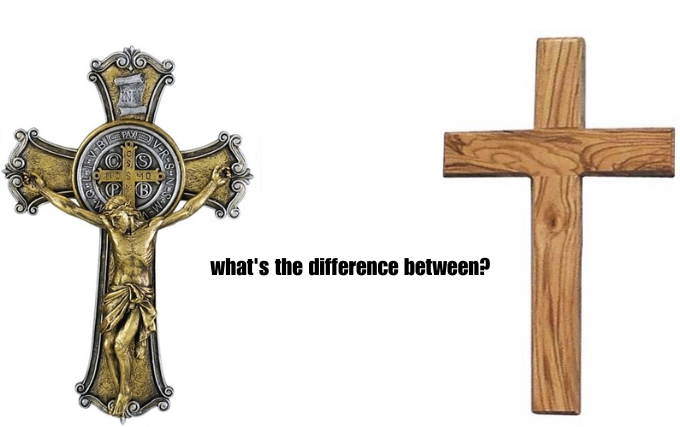
A common misconception is created by the question itself. Many people use the terms “Catholic” and “Christian” as if they describe two entirely separate groups. However, this perspective is not consistent with theological or historical truth. In the same way that a square is a type of rectangle, a Catholic is a type of Christian. What distinguishes Catholicism within the larger Christian family is the true question, not separation.
A Shared Foundation in Jesus Christ
Because the Catholic Church declares that Jesus Christ is the Son of God and the Savior of humanity, every Catholic is a Christian. According to Catholic doctrine, Jesus was born of the Virgin Mary, endured suffering under Pontius Pilate, died on the cross, rose from the dead on the third day, and ascended into heaven. They also look forward to His glorious return to judge both the living and the dead. Catholics are firmly rooted in the Christian heritage because of these fundamental principles.
The name “Christian” originated with followers of Jesus in the ancient city of Antioch. The word is derived from a Greek phrase that means “little Christ” or “little anointed one.” These early Christians were a unified community from the start. A little later, in 110 A.D., Saint Ignatius of Antioch coined the term “Catholic” to refer to the worldwide Church. The meaning of this Greek word is “universal” or “according to the whole.” All Christians were Catholics in those early ages, and all Catholics were Christians.
The Original Church and Its Structure
Jesus Christ is directly responsible for the creation of the Catholic Church. On the basis of the apostles, Jesus founded a visible Church. By giving Saint Peter the kingdom’s keys, he bestowed upon him a unique leadership position. According to the Church, this power has been passed down through an uninterrupted series of successors, resulting in an organization with a distinct hierarchical structure.
It was considerably later that other Christian traditions, especially Protestant faiths, came into being. Christianity was divided by the Protestant Reformation in the sixteenth century and the Eastern Schism in 1054. Disagreements over doctrine, authority, and practice led these subsequent groups to split apart from the Catholic Church. Because denominations suggest different equal branches of a bigger whole, referring to Catholicism as a “denomination” gives the wrong idea. Rather from being merely one branch of Christianity, the Church is seen by Catholics as the original, unadulterated religion.
Authority: Scripture, Tradition, and the Pope
The way that each tradition views authority is one of the biggest distinctions. Sola Scriptura, which holds that Scripture alone is the final authority for faith and practice, is a concept that many Protestant Christians adhere to. They hold that believers can interpret the Bible on their own or in their local communities, and that it includes all the information needed for salvation.
Catholicism adopts a different stance. The Church holds that both Sacred Scripture and Sacred Tradition are sources of divine revelation. These two sources are closely intertwined and cannot exist independently. In order to preserve the entirety of truth, the Church’s teaching authority, known as the Magisterium, interprets both Scripture and tradition. The bishops, who are the apostles’ heirs, and the Pope, who is Saint Peter’s heir, hold this power.
In Catholicism, the Pope has a special role. He is the highest earthly authority over the Church in his capacity as the Bishop of Rome. Catholics hold that the Pope has infallibility when it comes to matters of religion and morality, although this authority is limited to very specific circumstances. This does not imply that the Pope cannot make mistakes in commonplace subjects like science, math, or history. He remains entirely human and capable of sin, requiring his own confessor .
The Bible and Sacraments
The contents of the Protestant and Catholic Bibles are different. Tobit, Judith, 1 and 2 Maccabees, the Wisdom of Solomon, Sirach, and Baruch are among the writings included in the Catholic Old Testament but are absent from Protestant Bibles. Protestants refer to these texts as the Apocrypha, whereas Catholics refer to them as Deuterocanonical books. This divide came from the Protestant Reformation, which promoted a return to the Hebrew canon of Scripture by reformers like Martin Luther and John Calvin.
The seven sacraments—Baptism, Eucharist, Confirmation, Penance (Confession), Anointing of the Sick, Holy Orders, and Matrimony—are acknowledged by Catholics as conduits of God’s mercy. The Eucharist and baptism are the only sacraments recognized by the majority of Protestant traditions, and many see them as symbolic rather than acts of grace.
The focal point of Catholic worship is the Eucharist. Catholics believe in transubstantiation, which means that although if the bread and wine don’t change on the outside, they actually become the flesh and blood of Christ during Mass. The Lord’s Supper is interpreted by many Protestants as a symbolic commemoration of Christ’s sacrifice. The Eucharist is seen by Catholics as the “source and summit of the Christian life.”
Salvation and Grace
Another significant distinction is revealed by the idea of salvation. According to Catholic doctrine, salvation is obtained by God’s grace, which is given freely and cannot be merited. However, this grace must be demonstrated by a combination of good deeds and faith. The Council of Trent confirmed that justification is a process as much as an event. Catholics hold that mortal sin can cause Christians to forfeit their salvation and that they must turn from their sins and change their ways.
Justification by faith alone is emphasized in the majority of Protestant faiths. The only way to be saved is to put your faith in Christ’s completed work on the cross; human effort is not necessary. This salvation is given to believers passively, and their good deeds are motivated more by gratitude than by a desire to further their own salvation. Some Protestant denominations hold to the idea of “eternal security,” which holds that a person cannot lose their salvation after they have been saved.
Different interpretations of the Christian life result from these divergent perspectives on grace. In Catholicism, the Church and its sacraments are typically seen as a means of distributing grace. These means of grace are administered by the Church, and in order to keep their relationship with God intact, believers must stay in good standing with the Church. A closer, more intimate relationship between the believer and Christ is emphasized in Reformation Christianity. Believers become one with Christ via faith, and His righteousness atones for their sins. Because they know they are safe in Christ, this understanding allows believers to be open about their sin.
The Role of Mary and the Saints
Mary, the mother of Jesus, is especially revered among Catholics. They hold that she was protected from original sin from the moment of her conception because of her Immaculate Conception. Additionally, they affirm her perpetual virginity, which means that she remained a virgin for the whole of her life. According to the theology of her Assumption, she was carried into heaven both physically and spiritually. Catholics honor Mary as the mother of God and seek her intercession, but they do not worship her. As an intercessor between God and His people, they think she holds a unique position.
Since there is no convincing biblical evidence to support these Marian doctrines, many Protestant traditions reject them. They see Mary as both an average human being who gave birth to several children after Jesus and a devoted servant of God. They believe that one should only pray to God via Jesus Christ, not to Mary or the saints.
Additionally, Catholics honor the saints and ask them to intercede for the faithful. They regard the saints as heavenly intercessors and models of faith. Protestants generally oppose this practice, citing 1 Timothy 2:5, which states that there is “one mediator between God and mankind, the man Christ Jesus.” They believe that praying to the saints is superfluous and could compromise Christ’s special role.
Purgatory and the Afterlife
Purgatory is an intermediary stage where souls go through cleansing before entering paradise, according to Catholic doctrine. They are prepared for the complete holiness needed to enter God’s presence by this cleaning. Catholics believe that praying for the deceased and celebrating Masses for their intentions will aid souls in purgatory.
The idea of purgatory is rejected by the majority of Protestant faiths. They hold that whereas unbelievers face judgment after death, believers go straight to be with the Lord. They believe that the idea of an intermediate stage diminishes the adequacy of Christ’s atonement and find no convincing biblical evidence for it. They believed that believers may be fully purified by Christ’s sacrifice, negating the need for additional cleansing after death.
A Shared Family with Distinct Branches
There is a family tree-like tie between Catholicism and other Christian traditions. The apostles and Jesus Christ are the common ancestors of both. Both affirm the hope of eternal life, the Trinity, Christ’s divinity, and His death and resurrection. The Nicene Creed, which enumerates the central tenets of Christianity, is professed by both.
However, there are notable contrasts in authority, salvation, sacraments, and devotion to Mary and the saints. Centuries of religious development and discussion gave rise to these disagreements. They still influence each tradition’s identity and customs today. Clarifying the link between Catholicism and the larger Christian community is made easier by being aware of these differences. Although Catholics are completely Christian, their tradition differs from Protestantism and other Christian expressions in a few key ways.
Conclusion
Protestantism and Catholicism are based on the same belief in Jesus Christ as Lord and Savior. The Trinity, the cross, and the resurrection are all affirmed in both traditions. On authority, sacraments, salvation, and devotion to Mary and the saints, however, they differ. In addition to Scripture, Catholics view the Pope and Church tradition as crucial sources of guidance. The majority of Protestants rely only on Scripture. Protestants place more emphasis on faith alone, whereas Catholics see salvation as a process including both faith and works. Protestants only pray to God via Christ, whereas Catholics honor Mary and the saints. Although these distinctions are significant, they do not eliminate the similarities. Both parties read the same Gospels, follow the same risen Lord, and look forward to the same everlasting hope. Respect is fostered by being aware of these differences without dismissing actual doctrinal differences. In the end, all Catholics are Christians, but not all Christians are Catholics—and both are members of the same family of followers of Jesus.
